AI Governance
Register, assess and monitor AI systems with centralised risk management and compliance tracking

Register, assess and monitor AI systems with centralised risk management and compliance tracking

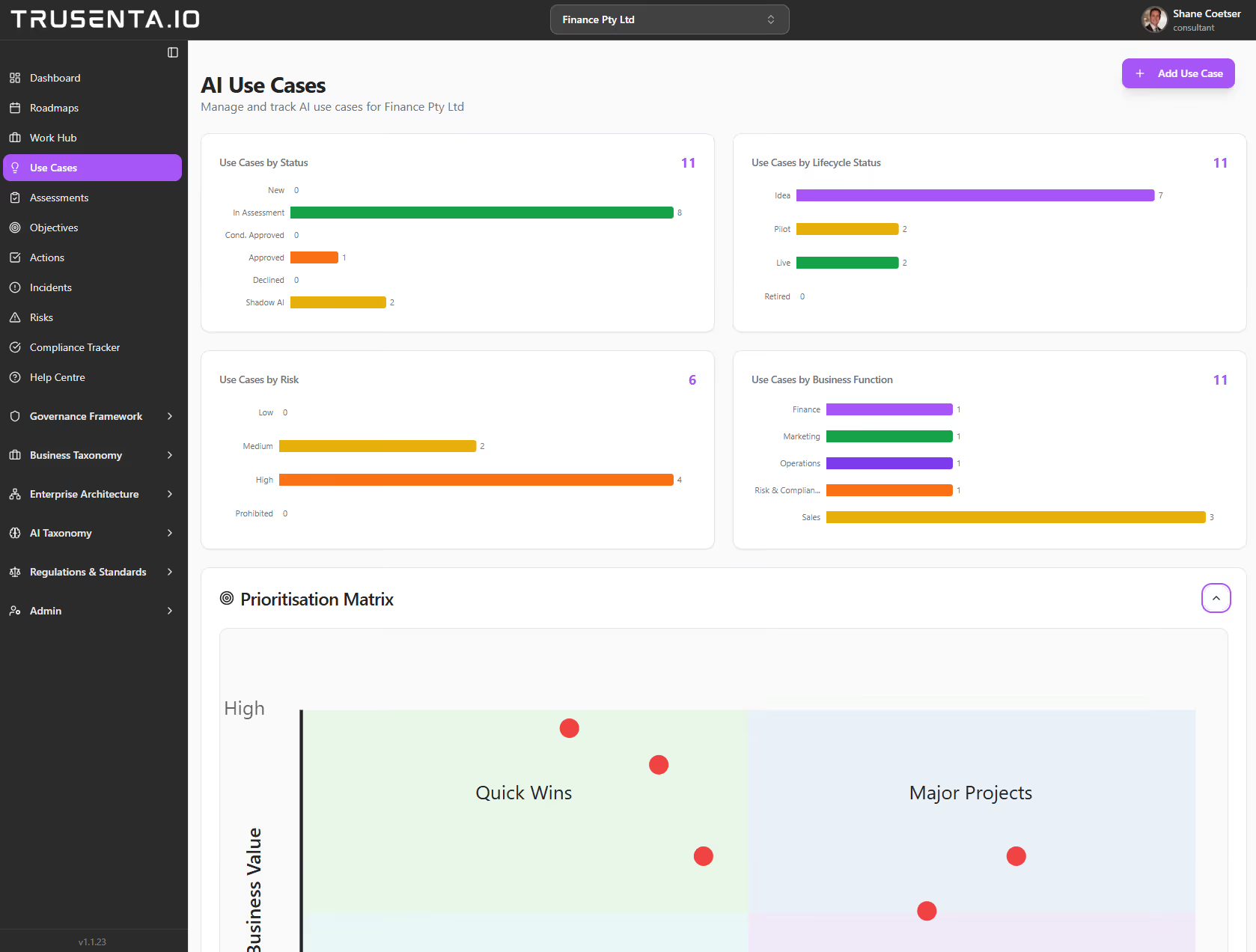
Register AI systems, conduct risk assessments and track compliance across EU AI Act, NIST AI RMF and ISO 42001 frameworks.
Legal evaluates regulatory risk, Privacy evaluates data protection risk, Security evaluates threat risk and Technology evaluates operational risk—all in separate documents with no consolidated view. You can't see the complete risk profile of an AI system because each team works independently. Approval decisions are made without full visibility into all risk dimensions.
Governance teams manually review every AI intake to decide what assessments are needed. High-risk systems slip through because no one realised they needed legal review. Assessment requirements are inconsistent because different people make different routing decisions for similar use cases.
Every organisation creates AI governance policies from scratch, reinventing risk categories, approval thresholds and responsible AI principles that already exist elsewhere. Your governance framework lives in Word documents that assessors don't reference when making decisions. Policy changes don't automatically flow through to active assessments.
When AI systems fail, incident details are scattered across email threads, Slack messages and incident management tools that don't understand AI context. You can't easily link incidents back to the original risk assessment to see what controls were supposed to prevent this. Lessons learned disappear instead of informing future assessments.
You're being asked to demonstrate compliance to multiple AI governance frameworks simultaneously. Assessing each use case separately against EU AI Act, then NIST AI RMF, then ISO 42001 means tripling the work. Controls overlap across frameworks but you're documenting them separately every time.
You're using dozens of AI vendors but don't have a central record of who they are, what they provide or what contractual obligations exist. When a vendor has a security incident, you can't quickly identify which use cases are affected. Contract renewal dates are tracked in procurement systems that governance can't access.
Risk assessments currently take weeks because you're building the assessment framework for each use case from scratch. Different assessors ask different questions, leading to inconsistent risk ratings. You can't compare risk levels across your AI portfolio because there's no standard methodology.
Teams are deploying AI tools that governance never sees until someone asks if they're compliant. Spreadsheets can't capture the full context needed to assess risk properly. You're making approval decisions with incomplete information about what the system does, what data it processes and who it affects.
Legal evaluates regulatory risk, Privacy evaluates data protection risk, Security evaluates threat risk and Technology evaluates operational risk—all in separate documents with no consolidated view. You can't see the complete risk profile of an AI system because each team works independently. Approval decisions are made without full visibility into all risk dimensions.
Governance teams manually review every AI intake to decide what assessments are needed. High-risk systems slip through because no one realised they needed legal review. Assessment requirements are inconsistent because different people make different routing decisions for similar use cases.
Every organisation creates AI governance policies from scratch, reinventing risk categories, approval thresholds and responsible AI principles that already exist elsewhere. Your governance framework lives in Word documents that assessors don't reference when making decisions. Policy changes don't automatically flow through to active assessments.
When AI systems fail, incident details are scattered across email threads, Slack messages and incident management tools that don't understand AI context. You can't easily link incidents back to the original risk assessment to see what controls were supposed to prevent this. Lessons learned disappear instead of informing future assessments.
You're being asked to demonstrate compliance to multiple AI governance frameworks simultaneously. Assessing each use case separately against EU AI Act, then NIST AI RMF, then ISO 42001 means tripling the work. Controls overlap across frameworks but you're documenting them separately every time.
You're using dozens of AI vendors but don't have a central record of who they are, what they provide or what contractual obligations exist. When a vendor has a security incident, you can't quickly identify which use cases are affected. Contract renewal dates are tracked in procurement systems that governance can't access.
Risk assessments currently take weeks because you're building the assessment framework for each use case from scratch. Different assessors ask different questions, leading to inconsistent risk ratings. You can't compare risk levels across your AI portfolio because there's no standard methodology.
Teams are deploying AI tools that governance never sees until someone asks if they're compliant. Spreadsheets can't capture the full context needed to assess risk properly. You're making approval decisions with incomplete information about what the system does, what data it processes and who it affects.
Explore some of our other modules.
Partner with Australia's AI strategy and governance specialists. From adoption roadmaps to ISO 42001 audit readiness.