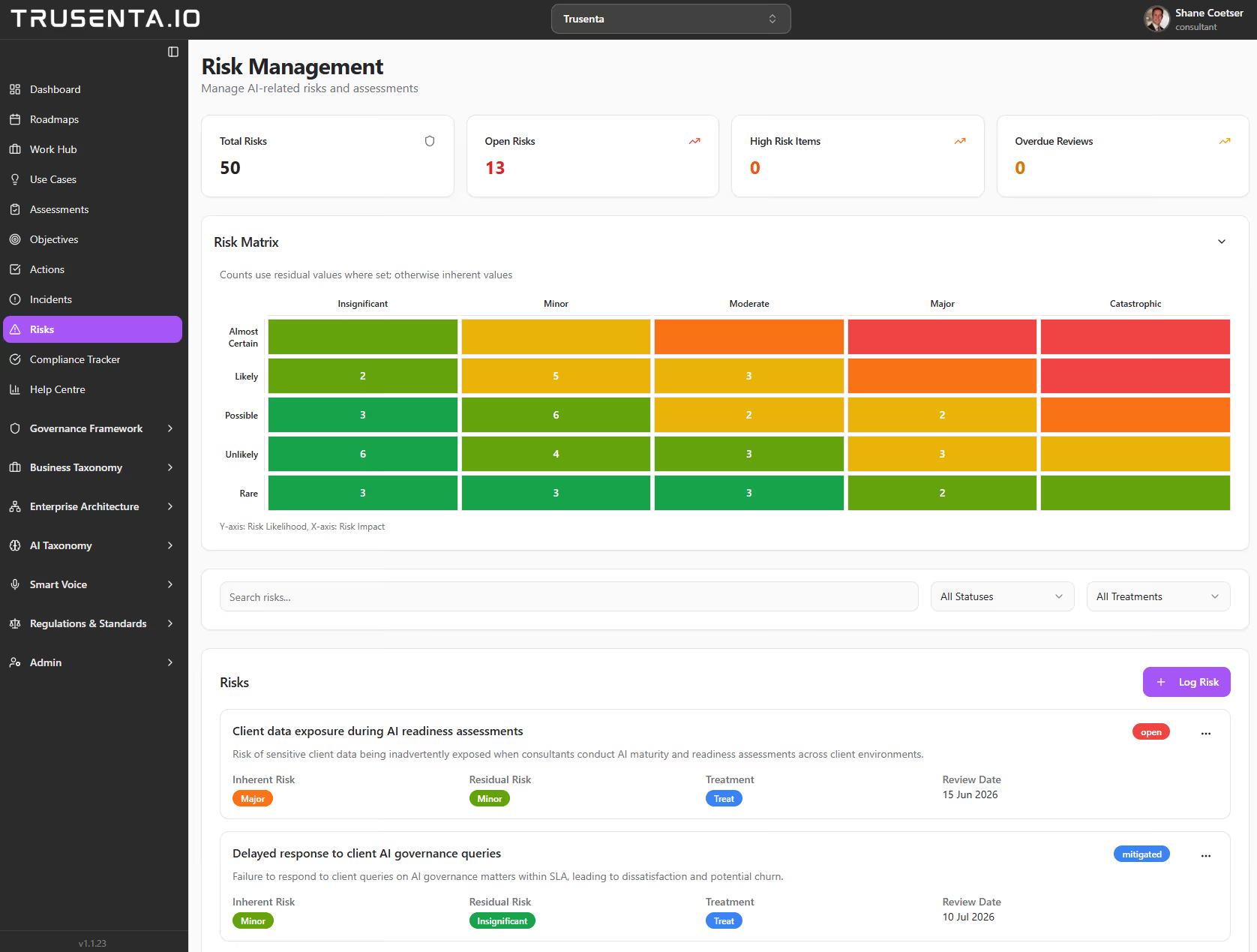
Risk Management

Identify, assess and treat AI-specific risks with control libraries, scoring matrices and treatment tracking

TRUSENTA.IO - Risk Management module

Powerful features

Identify AI-specific risks, assess likelihood and impact, link to controls, track treatment and monitor residual risk over time.

Risk Commentary & Collaboration
SaaS Webflow Template - Palo Alto - Created by Wedoflow.com and Azwedo.com
Threaded discussions on risk records with audit trail of comments and decision rationale
Primary benefit:
Capture risk assessment discussions and decisions with full context for future reference and audit
Problem it solves:

Risk assessment discussions happen in meetings and emails with decisions made verbally. Rationale for risk ratings isn't documented so when questioned months later, you can't explain why. Collaboration on risk treatment happens outside the risk register with no audit trail.

Risk Scoring Matrix
SaaS Webflow Template - Palo Alto - Created by Wedoflow.com and Azwedo.com
Visual risk heat maps with colour-coded severity bands for prioritisation and communication
Primary benefit:
Communicate risk exposure clearly with visual matrices that stakeholders understand immediately
Problem it solves:

Risk scores are numbers in spreadsheets that stakeholders don't understand. You can't visually show risk profile to executives without creating custom charts. Prioritisation isn't clear because high and moderate risks aren't visually distinct.

Residual Risk Tracking
SaaS Webflow Template - Palo Alto - Created by Wedoflow.com and Azwedo.com
Monitor risk exposure after controls are implemented showing risk reduction over time
Primary benefit:
Demonstrate that risk treatment actually reduces risk exposure with before and after metrics
Problem it solves:

You assess inherent risk at identification then never reassess after controls are implemented. You can't show that controls actually reduce risk because residual risk isn't measured. Risk registers become static snapshots instead of living views of current risk posture.

Risk Treatment Planning
SaaS Webflow Template - Palo Alto - Created by Wedoflow.com and Azwedo.com
Assign treatment strategies with ownership, deadlines and progress tracking for each risk
Primary benefit:
Convert risk identification into actionable treatment plans with accountability and completion tracking
Problem it solves:

Risk identification happens but treatment doesn't. Risks are documented with good intentions but no one is assigned to address them. Treatment plans exist in documents that aren't monitored for completion. You discover untreated risks when incidents occur.

Control Library & Assignments
SaaS Webflow Template - Palo Alto - Created by Wedoflow.com and Azwedo.com
Link risks to controls from centralised library showing how controls mitigate specific risk exposures
Primary benefit:
Demonstrate explicit relationships between risks and controls instead of assuming controls work
Problem it solves:

You've documented controls but can't explain which controls address which risks. Risk treatment claims controls exist without proving they're relevant to the risk. Auditors ask "what controls mitigate this risk" and you have to search through control documentation.

Likelihood & Impact Assessment
SaaS Webflow Template - Palo Alto - Created by Wedoflow.com and Azwedo.com
Evaluate risk likelihood and impact using defined scales with automated risk score calculation
Primary benefit:
Quantify risk exposure consistently across all risks with objective scoring methodology
Problem it solves:

Risk assessment is subjective with no consistent methodology for evaluating likelihood and impact. Different assessors rate similar risks differently because scales aren't defined. You can't prioritise risks because there's no quantitative scoring.

Risk Registry & Categorisation
SaaS Webflow Template - Palo Alto - Created by Wedoflow.com and Azwedo.com
Centralised risk register with AI-specific categorisation and links to affected use cases, technologies and vendors
Primary benefit:
Maintain complete visibility into AI risks with proper categorisation and business context
Problem it solves:

AI risks are tracked in spreadsheets alongside operational risks using categories that don't fit AI-specific concerns. You can't filter to see model risks versus data risks versus deployment risks. Risks are documented without linking to the use cases or vendors they affect, losing business context.

Other Modules

Explore some of our other modules.